
3.5. Optimization Reports Grouping
Optimization Reports are designed to summarize evidence focused on how outcomes can be modified or optimized in clinical practice, rather than to compare IOLs using standardized endpoints. For this reason, they are organized differently from Confirmatory Reports and are intended to support clinical decision-making through contextual interpretation rather than quantitative synthesis.
In this view, Optimization Reports are grouped using a two-step navigation structure, allowing users to explore practical evidence efficiently while maintaining clarity about the scope and limitations of the data.
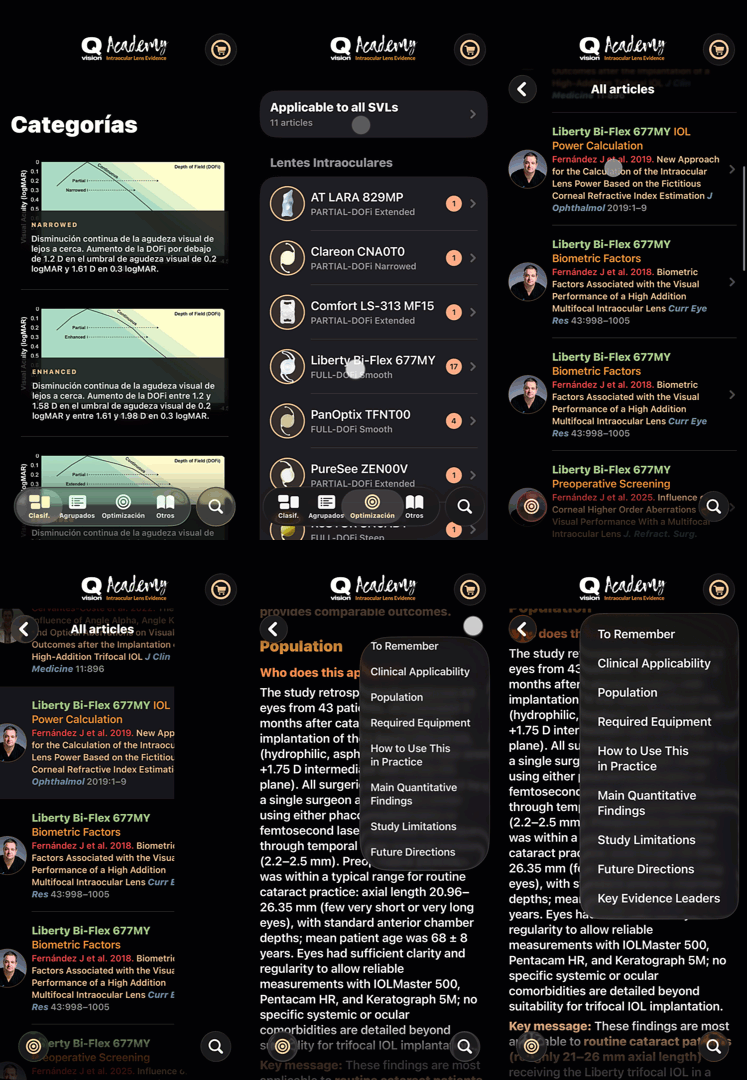 | How to access this viewThis view is accessed by selecting the Optimization tab in the bottom navigation bar of the app. What can be seenA list of IOLs, each serving as an entry point to optimization-related evidence. For each IOL, a topic-based grouping of Optimization Reports addressing different clinical strategies or questions. Individual Optimization Reports, presented as summaries intended to guide interpretation, not replace full-text reading. |
|---|
3.5.1. Organization logic
Optimization Reports are grouped as follows:
First level: Intraocular Lens (IOL)
Reports are first organized by IOL model. This allows users to focus on all optimization-related evidence available for a specific lens of interest.Second level: Topic
Within each IOL, reports are grouped by topic, such as target refraction strategies, patient selection, surgical modifications, or specific clinical scenarios. This structure helps clinicians quickly identify evidence relevant to a particular optimization question.
Because Optimization Reports do not rely on standardized clinical endpoints, their results cannot be pooled or meta-analyzed. Outcomes are often heterogeneous, context-dependent, and tailored to specific clinical strategies, making direct statistical comparison inappropriate.
The purpose of this section is therefore to provide a curated overview of recent and relevant optimization evidence, highlighting trends, strategies, and practical considerations. For correct interpretation and clinical application, the full original study should always be consulted.