
1.2. How to Start?
IOLEvidence is designed to help clinicians access, interpret, and apply scientific evidence on intraocular lenses (IOLs) in a practical and efficient way.
There are several complementary ways to start using the app, depending on the clinical question and the user’s needs.
1.2.1. Stay up to date
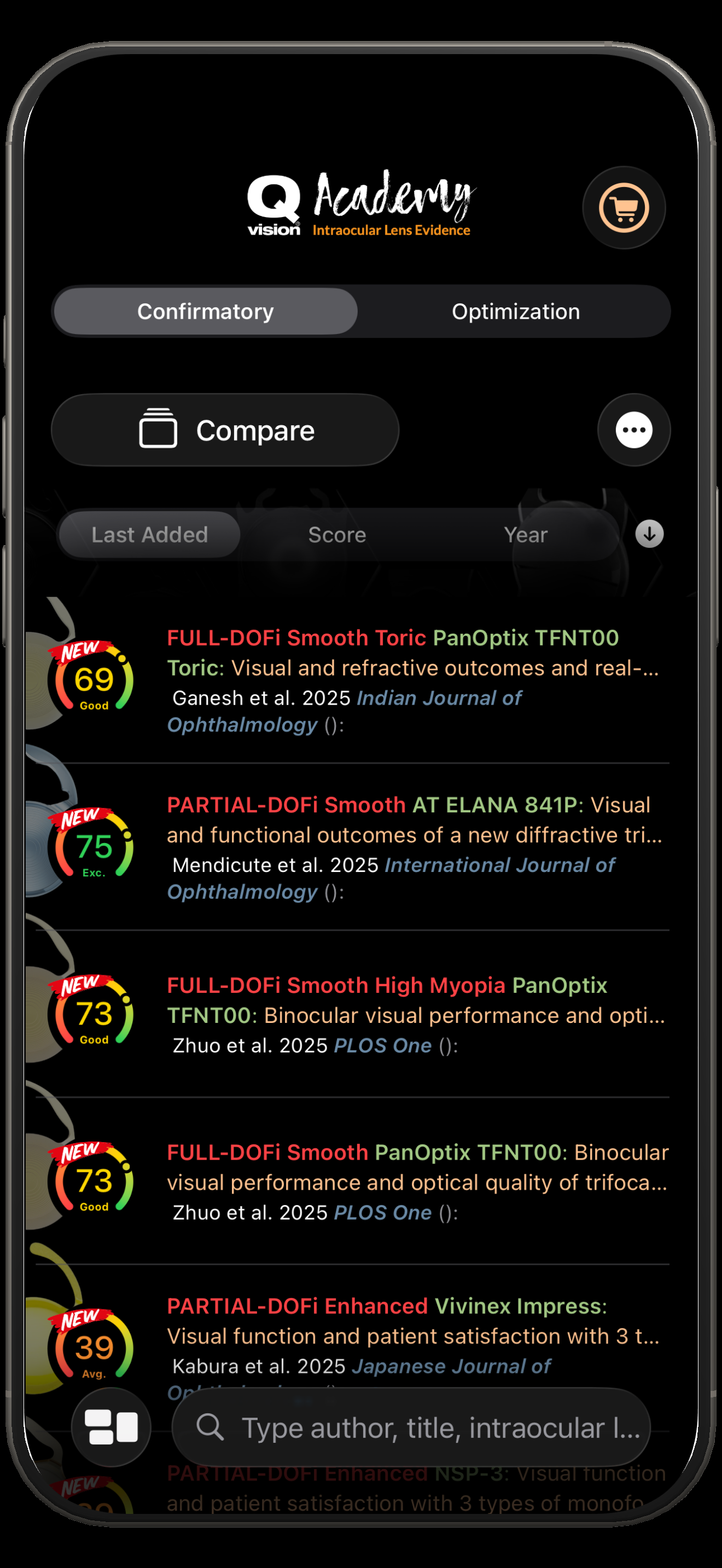
One of the simplest and most practical ways to start using IOLEvidence is to stay continuously updated with the latest scientific evidence. The app is periodically updated with newly published studies. Newly added reports are clearly identified and can be accessed directly from the Search section. The Search section is accessed by tapping the magnifying glass icon in the bottom navigation bar. By default, the list is ordered by Last Added, allowing users to immediately view the most recent reports included in the application and quickly identify new scientific publications.
Importantly, the 20 most recent studies are available Open Access, allowing any user, regardless of subscription status, to:
Follow recent scientific publications
Become aware of new evidence on IOLs
Stay informed about emerging results and trends
This approach is ideal for clinicians who want to remain up to date with minimal effort.
 |  |
|---|
1.2.2. Explore Confirmatory Reports
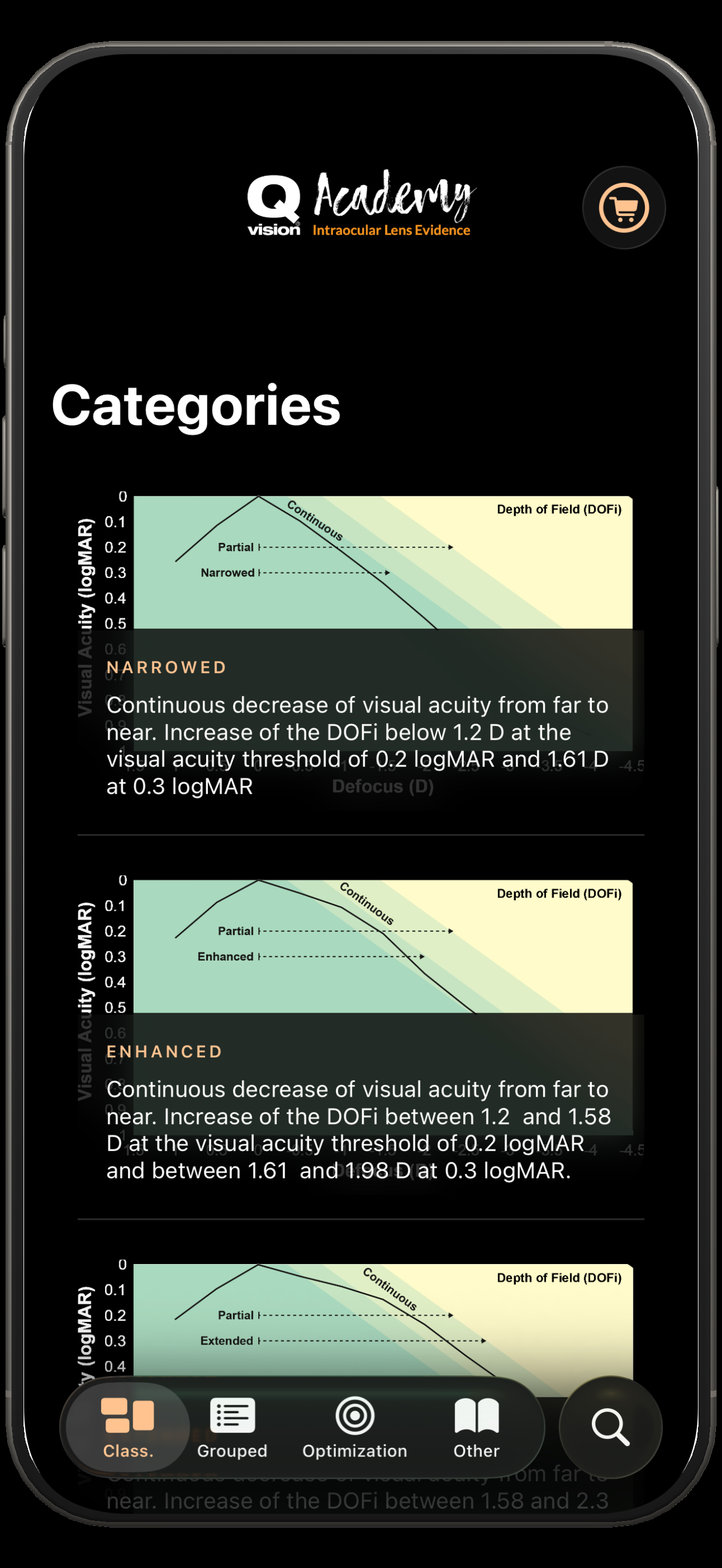
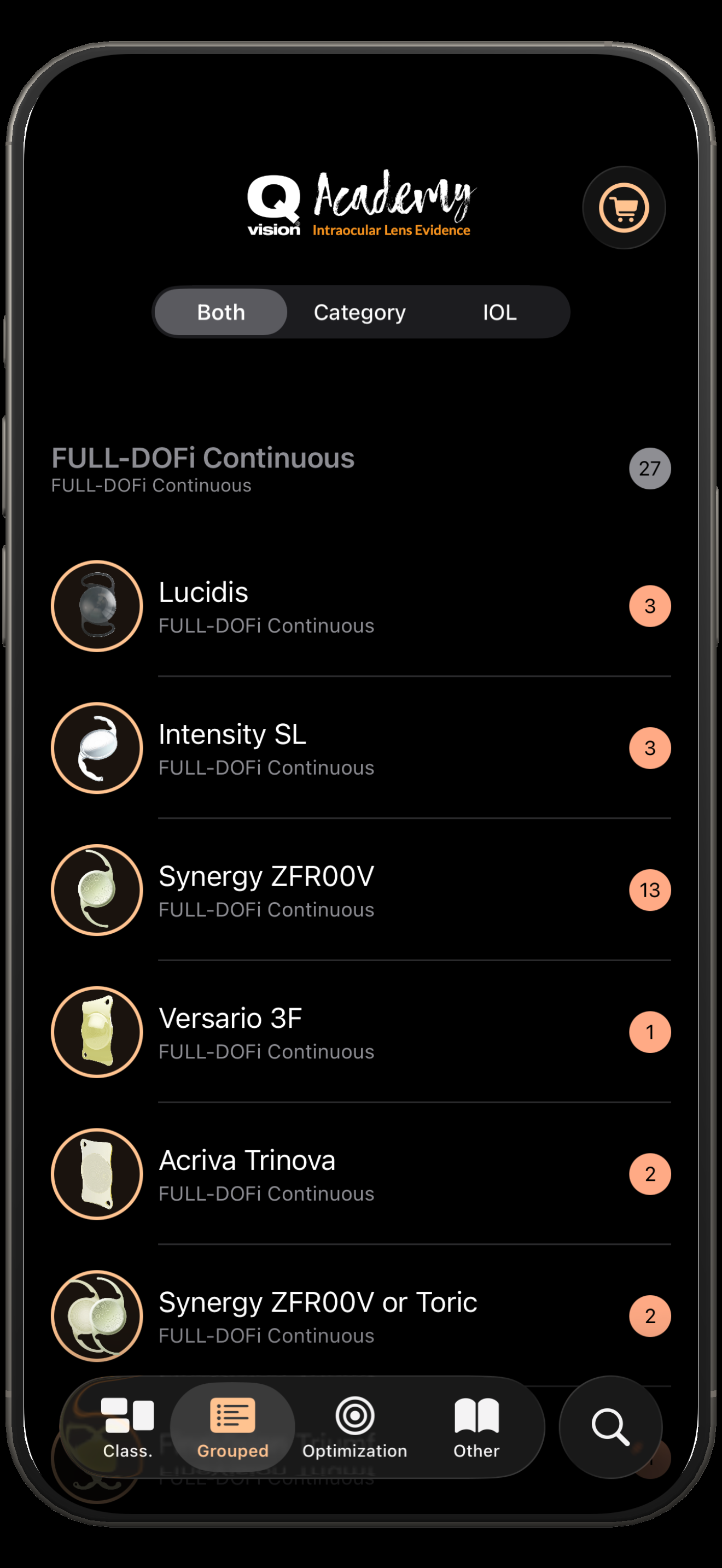
Another way to start is by exploring Confirmatory Reports through Functional Classification or IOL model, using the Classification and Grouped sections on which reports are:
Organized by Functional Classification categories
Grouped by IOL model
Allocated by Population or Procedure characteristics
Presented in a Standardized format suitable for comparison
This allows the user to:
Access all available reports for a specific IOL
Understand how a lens behaves across different Populations or Procedure variations
Compare results between lenses within the same functional category
Identify consistency or variability across studies
In addition, Confirmatory Reports can be explored according to Population and Procedure characteristics, such as:
Healthy populations
Post-refractive surgery eyes
Eyes with comorbidities
…
This approach is particularly useful when the clinical question focuses on classification, benchmarking, or population-level performance.
This approach is ideal for clinicians who want to remain up to date with minimal effort.
 |  |
|---|
1.2.3 Explore Optimization Reports
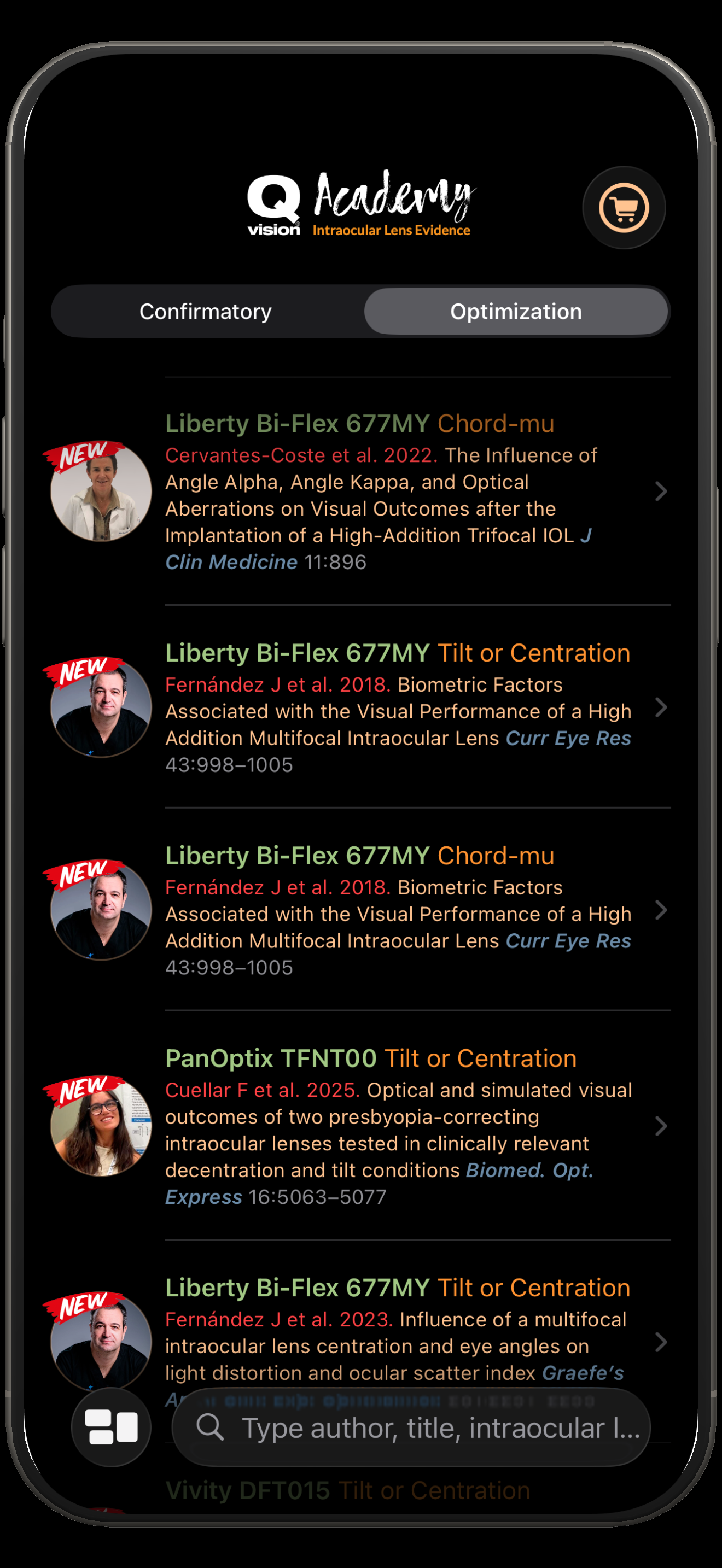
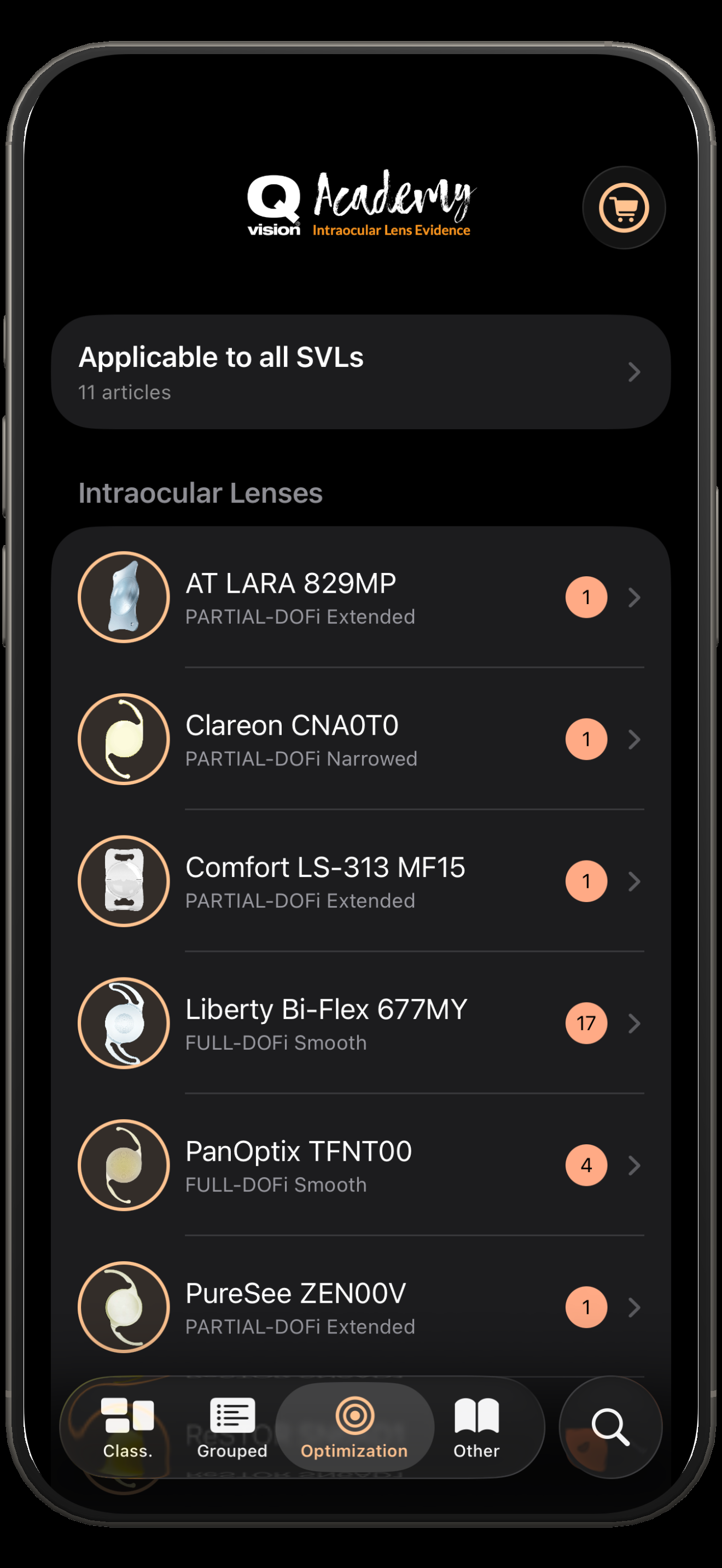
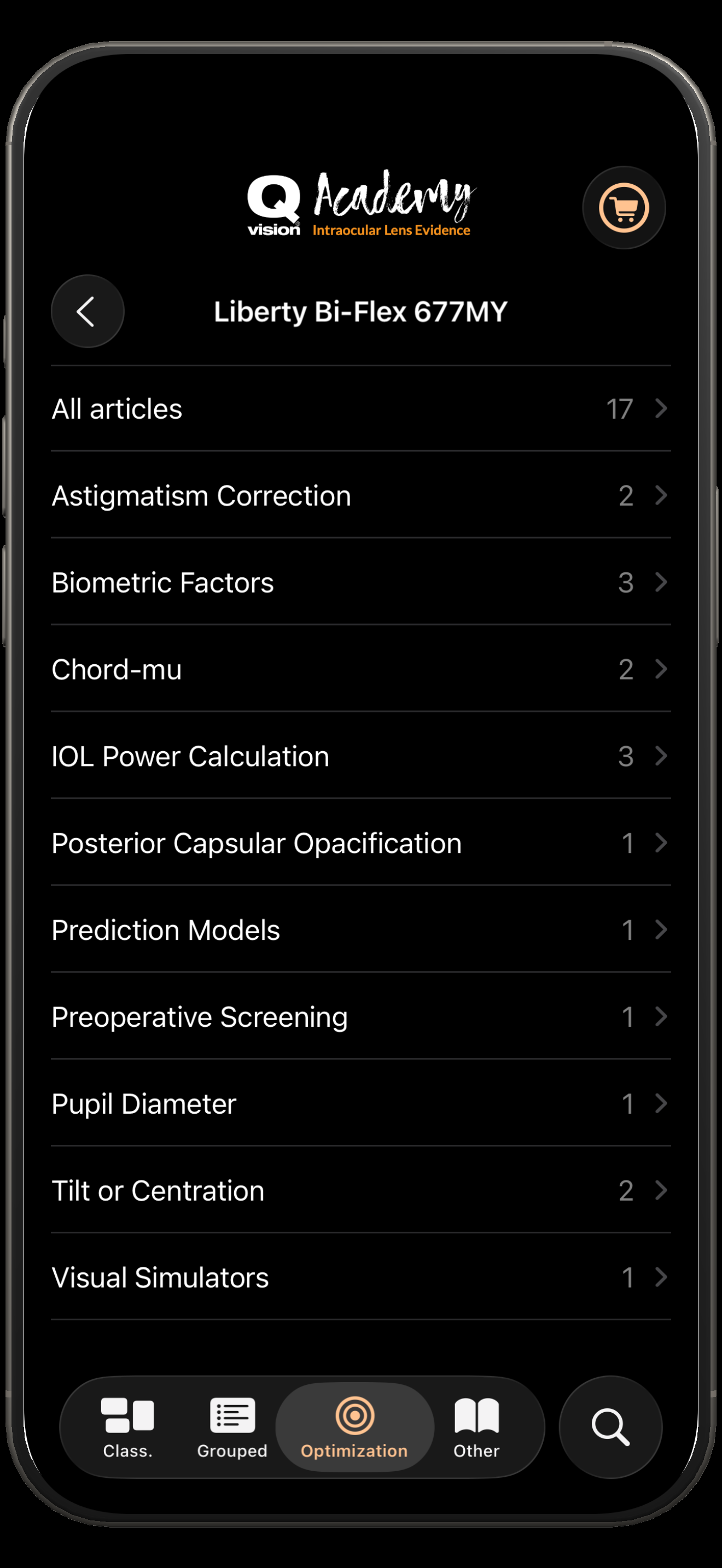
For clinicians interested in personalization and interpretation, IOLEvidence also allows exploration through Optimization Reports.
Optimization Reports are:
Grouped by intraocular lens
Subgrouped by areas of clinical interest
This structure helps the user understand:
Why outcomes may vary between patients
Under which conditions a lens may perform differently
How patient-specific factors influence functional behavior
This approach is especially valuable when selecting an IOL for a specific patient profile, rather than relying solely on average population results.
This approach is ideal for clinicians who want to remain up to date with minimal effort.
 |  |
|---|